Govee Glide Hexa Review: Panels for Gamers
Published: July 9, 2026
We independently test everything we recommend.
Buying through links on our site supports our work.
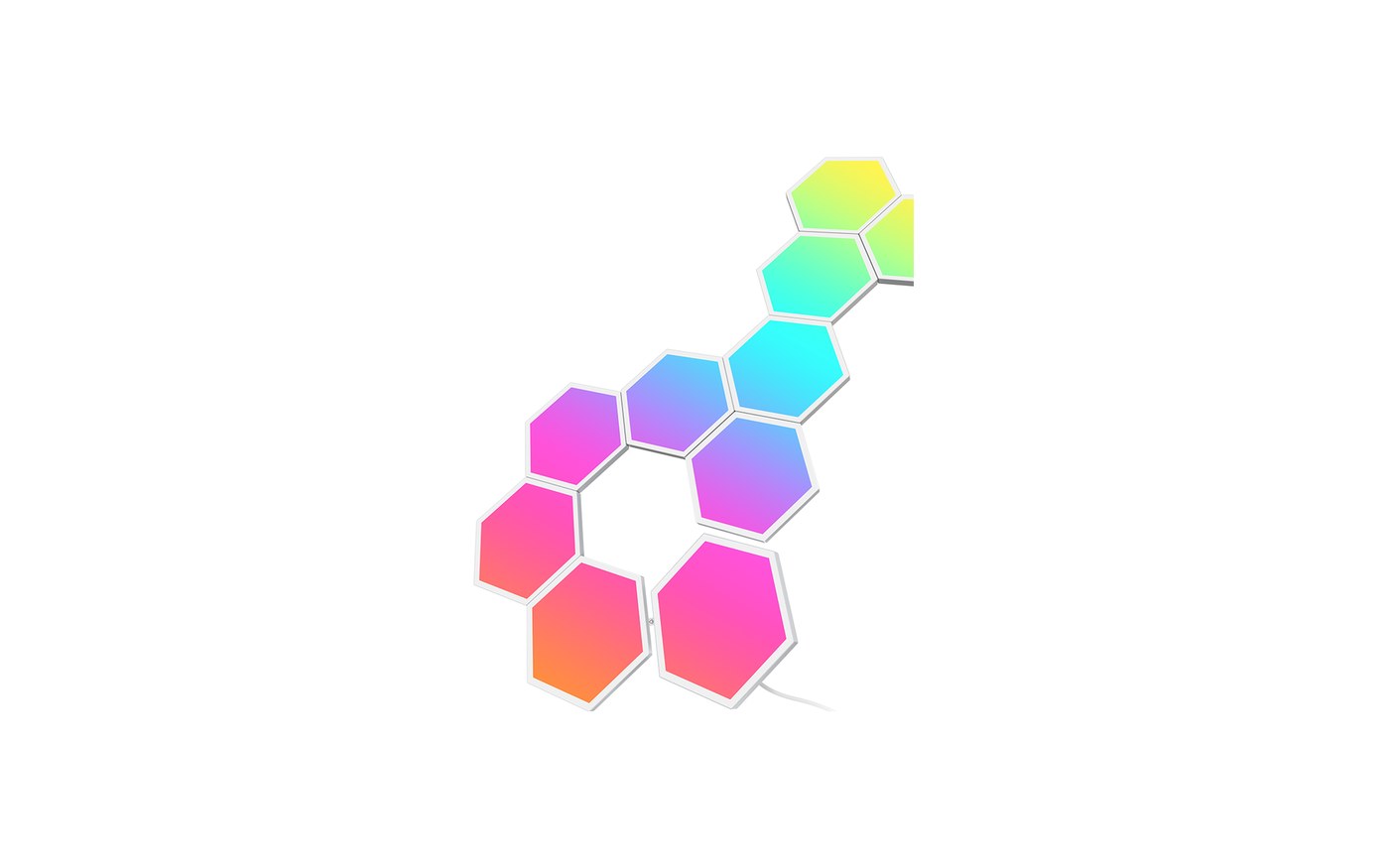
Editor's Note: Ten-panel kit tested for four weeks on the wall behind a dual-monitor setup, side by side with the Nanoleaf Hexagons for two of those weeks.
The Govee Glide Hexa panels make their pitch in one line: ten hexagons for $170 versus Nanoleaf's nine for $200, and each Govee panel renders its own multi-zone gradient where a Nanoleaf hexagon is a single color at a time. If your panels live in a gaming room and exist to be lit, that pitch mostly lands. The exceptions are worth three minutes of your time.
What does multi-zone per panel change?
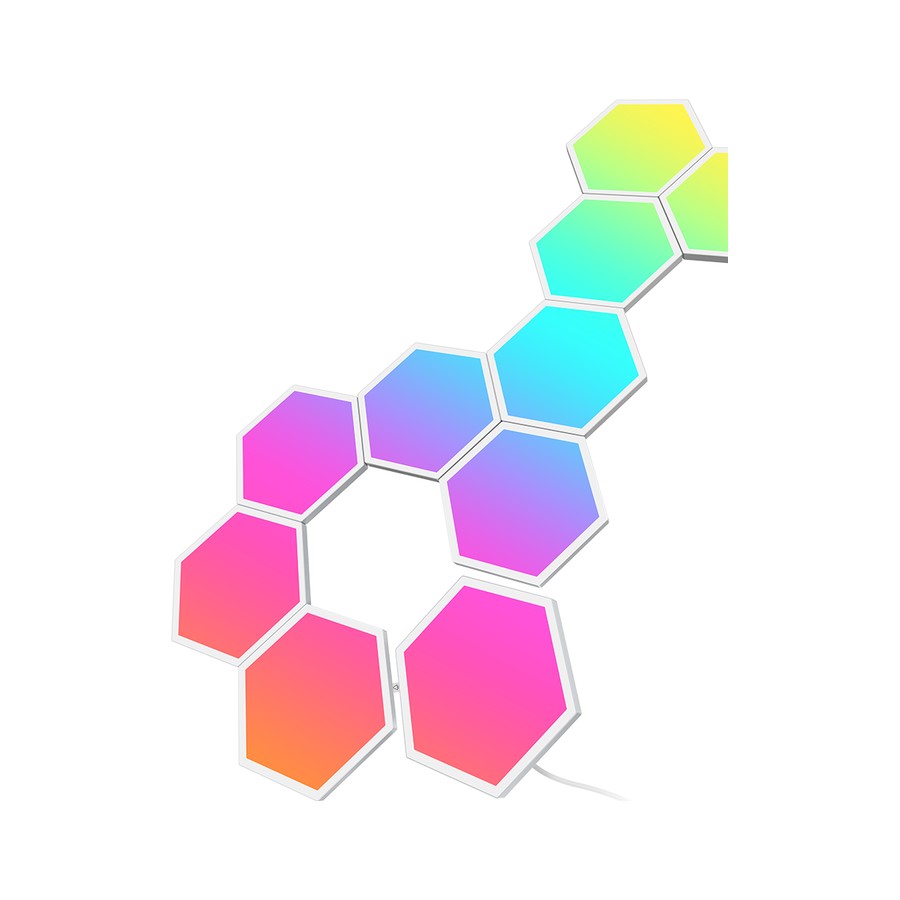
It changes what the wall can do. A single Glide Hexa panel can fade violet-to-cyan across its own face, so a ten-panel array behaves like a low-res video wall: waves roll across the layout smoothly, fire effects flicker within panels instead of per-panel, and music mode has visible motion instead of blinking tiles. Nanoleaf approximates some of this in software, but the hardware zones give Govee's effects a fluidity you notice immediately in a dark room. Brightness lands close between the two systems; both wash a wall convincingly.
What did Govee leave out?
The smart-home spine and the daytime looks. There's no Thread and no Matter here, just Wi-Fi plus Alexa and Google, so Apple Home households are out entirely. No touch reactivity, which parents tell us is half of why kids love the Nanoleafs. And with the lights off, the Glide Hexa is visibly the cheaper product: glossier plastic, more prominent seams, and a wiring channel you'll want to route thoughtfully. Mounting tape held on our textured wall better than Nanoleaf's did, one point Govee wins outright.
Specs, Pros & the Bottom Line
Govee Glide Hexa Light Panels
Nanoleaf's look without Nanoleaf's invoice
- Our Rating: 3.9 / 5.0
- Price: $170 (10 panels)
- Type: Modular wall panels
- Hub needed: No
- Brightness: washes a full wall
- Matter: No
- Ecosystems: Alexa, Google
- Panel zones: Multi-zone RGBIC per hexagon
Pros
- Ten panels for less than Nanoleaf charges for nine
- Each hexagon has multiple color zones, so one panel can show a gradient
- Bright enough to wash a gaming wall on its own
Cons
- No Thread and no touch reactivity, the two things Nanoleaf holds over it
- Visible seams and wiring channel look budget up close with lights off
- Govee app, again: powerful, exhausting
With the lights off, you can see where the $30 went missing: seams between panels are more visible than Nanoleaf's, the surface plastic is glossier and cheaper-looking, and there's no touch response for kids to play with. Power them on and the story flips. Multiple color zones per panel means ten hexagons render gradients that Nanoleaf needs software dithering to fake, and peak brightness washes a wall hard enough to double as bias lighting for a whole battlestation. For a gaming room where the panels live lit, this is the better buy at $170 for ten. For a living room where they're furniture half the day, or a Thread-based smart home, the Nanoleaf Hexagons justify the extra $30.
What to buy instead
For living rooms, Apple Home, or anywhere the panels spend daylight as decor, the Nanoleaf Hexagons are worth the extra $30 for fit, finish, Thread, and touch. Want ambient color without the geometry project? A Govee M1 strip delivers more lumens per dollar than any panel system.
The verdict
The Glide Hexa is the right panel for the room where panels make sense to most people: the battlestation, the streaming backdrop, the teenager's lair. It's a 3.9 instead of a 4.2 because it's a lighting product, not a smart-home product, and because Govee's app makes you work for the good stuff. In the dark, where these things live, nobody will guess you saved the $30.