Philips Hue A19 Review: Still the Benchmark
Published: July 9, 2026
We independently test everything we recommend.
Buying through links on our site supports our work.
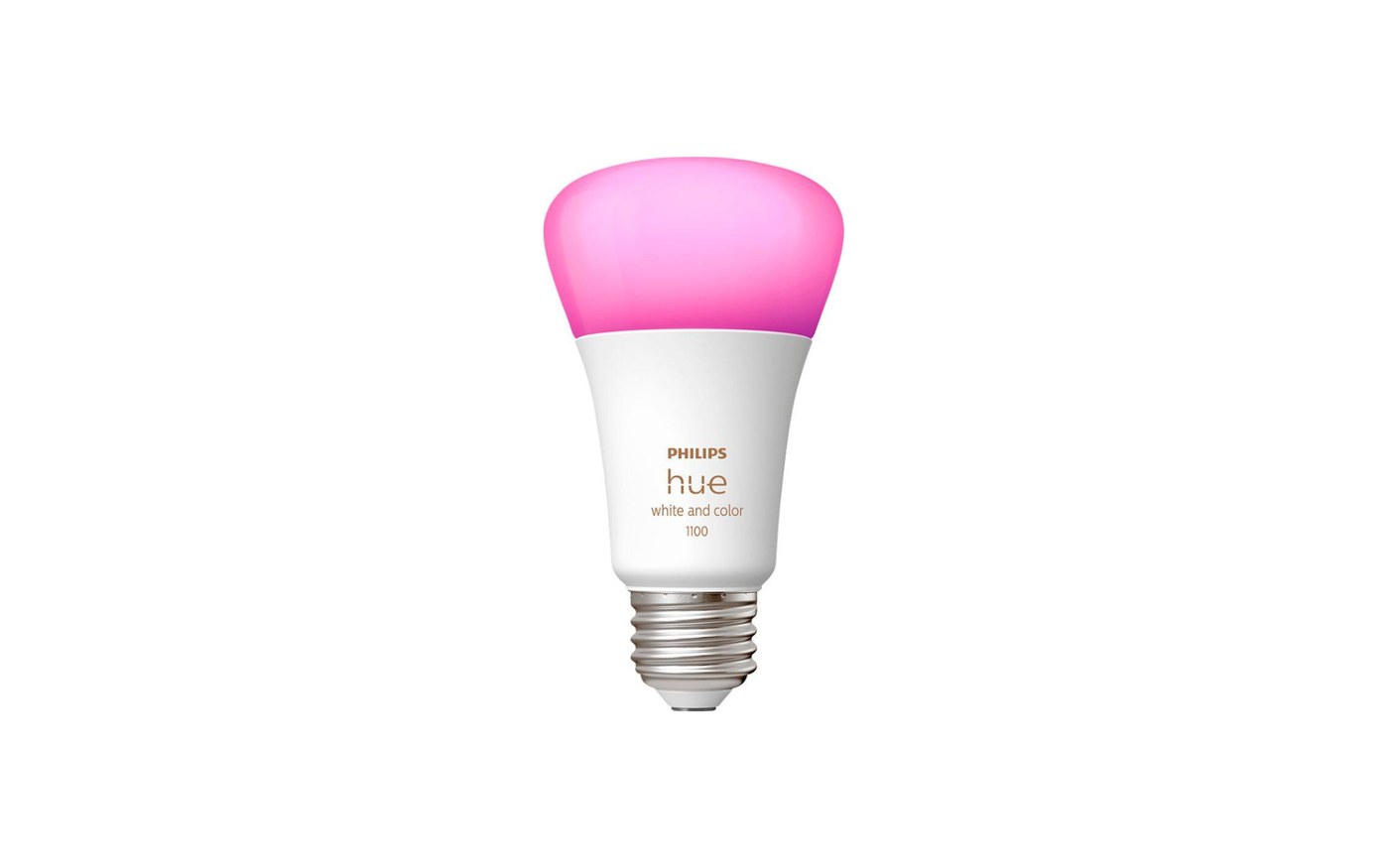
Editor's Note: Tested for six weeks: 14 Hue bulbs (Bridge and Bluetooth-only) against Tapo, Wyze, LIFX, Cync, and Nanoleaf bulbs in the same fixtures.
The Philips Hue White and Color Ambiance A19 costs $50 before you've bought the $60 Bridge that unlocks its best features. That pricing should be disqualifying in 2026, when a $10 Tapo does most of the same tricks. It isn't, and after 6 weeks running 14 Hue bulbs next to every budget rival in our test house, we can point at exactly why. This is the one bulb that never made us think about it.
What does $50 buy that $10 doesn't?
Three unglamorous things. Color fidelity: Hue's reds stay red instead of drifting neon, and skin tones under its warm white look human, which you notice at the dinner table, not in a spec sheet. A real dimming floor: it fades to a 0.2% candle glow without the flicker every budget bulb shows below 5%. And consistency: across 300+ scene changes in our test period, not one bulb missed a command. The budget bulbs each failed a handful of times. Once a week doesn't sound like much until the bulb that misses is the hallway light at 2 AM.
Do you actually need the Bridge?
Eventually, yes. Out of the box the bulb runs fine over Bluetooth from your phone. The $60 Bridge is what adds Thread reliability, Matter support, out-of-home control, and scenes that hit 20 bulbs at once without a stagger. Think of the real price as $110 for the first light and $50 after. That's also the fair way to compare it against a Caséta dimmer setup, which carries its own $80 hub.
Specs, Pros & the Bottom Line
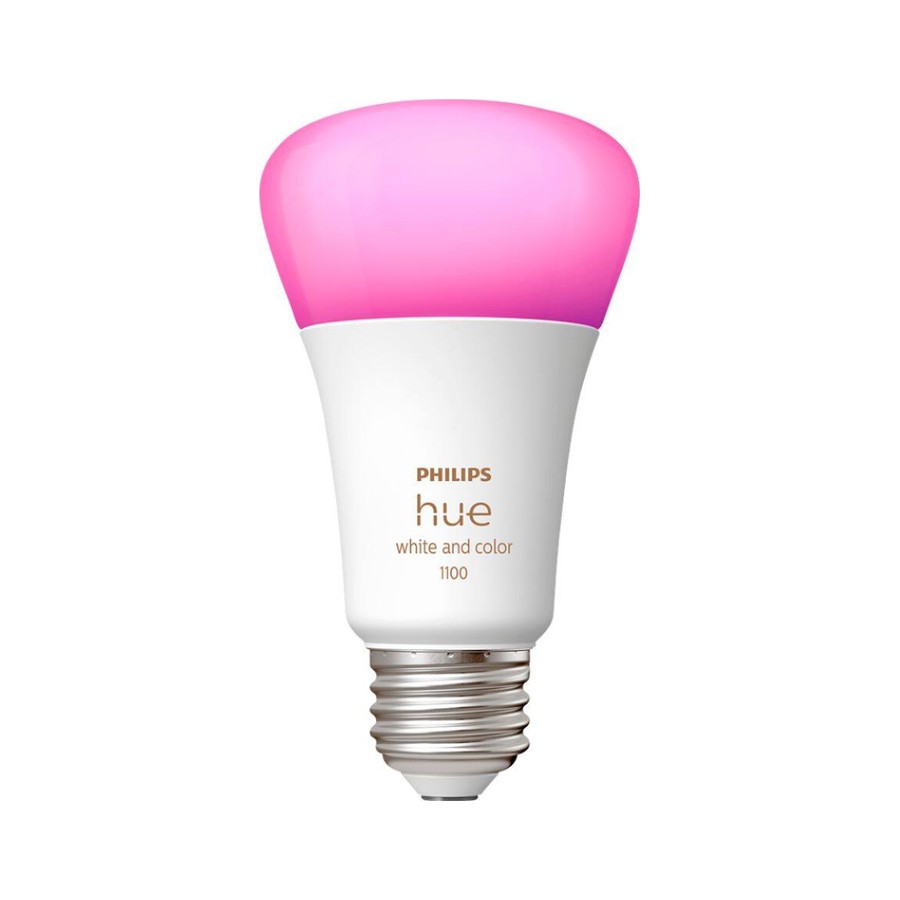
Philips Hue White and Color Ambiance A19
The bulb everything else gets measured against
- Our Rating: 4.6 / 5.0
- Price: $50 (Bridge $60 extra)
- Type: A19 bulb (75 W class)
- Hub needed: Optional Bridge (unlocks Matter)
- Brightness: 1,100 lumens
- Matter: Yes (via Bridge)
- Ecosystems: Apple Home, Alexa, Google, SmartThings
- Dimming floor: 0.2%
Pros
- Colors look right, not radioactive. Skin tones stay human under it
- Works over Bluetooth out of the box, gains Thread and Matter with the Bridge
- Dims to a true candle-glow 0.2% without flicker
- Survived 300+ scenes and automations in our testing without one dropped command
- Resale ecosystem: seven years of accessories all still work together
Cons
- The full experience assumes a $60 Bridge, so the real starting price is $110
- A Govee or Tapo bulb does 80% of this for a quarter of the money
Price is the honest problem here: one bulb costs what a Tapo 4-pack does, and Hue quietly assumes you'll add the $60 Bridge for Thread, Matter, and out-of-home control. Pay it anyway if lighting is becoming a hobby. After 6 weeks running 14 Hue bulbs alongside every budget rival in this guide, the difference shows up in the boring places. Reds that don't turn neon, dimming that reaches 0.2% without strobing, and zero dropped commands in over 300 scene changes. Nothing else we tested manages all three. Buy it if you want lighting that behaves identically in year five as on day one. If you just want a colorful bedroom lamp bulb, the TP-Link Tapo L535E is the sane choice.
What to buy instead
Just want a colorful lamp or two? The TP-Link Tapo L535E is a tenth the ecosystem price and 90% of the bulb. Want maximum saturation and no hub anywhere? The LIFX SuperColor out-punches Hue on color and undercuts it on price, with a shakier corporate story behind the firmware.
The verdict
The Hue A19 is what smart lighting looks like when someone sweats the last 10%: the dimming curve, the color science, the not-failing. You pay roughly triple for that last 10%. Whole-home builders and anyone who's been burned by flaky budget gear should pay it. For a first experiment in smart lighting, start with a Tapo 2-pack and see if the hobby sticks.