Amazfit Active 2 Review: The Best $100 Smartwatch?
Published: July 7, 2026
We independently test everything we recommend.
Buying through links on our site supports our work.
Editor's Note: Prices checked July 2026. The Sport edition has been dipping to $84.99 in sales, and the Premium dropped to $92 back in February, so it pays to wait for a deal.
The Amazfit Active 2 costs $99.99 and does about 90 percent of what a $350 smartwatch does. That's the short version of this review.
The longer version took some digging. Rather than parrot the spec sheet, we pulled apart the three most thorough independent tests published on this watch: Notebookcheck's lab measurements, TechAdvisor's six-month wear test and Trusted Reviews' verdict, then cross-checked every battery and accuracy claim against Amazfit's own numbers. The data mostly agrees. Where it doesn't, we say so.
Buy it if you want offline maps, a sunlight-readable AMOLED and honest heart-rate numbers for two figures. Skip it if you pay by wrist or train by intervals. The full specs are below.
Amazfit Active 2 — Quick Specs
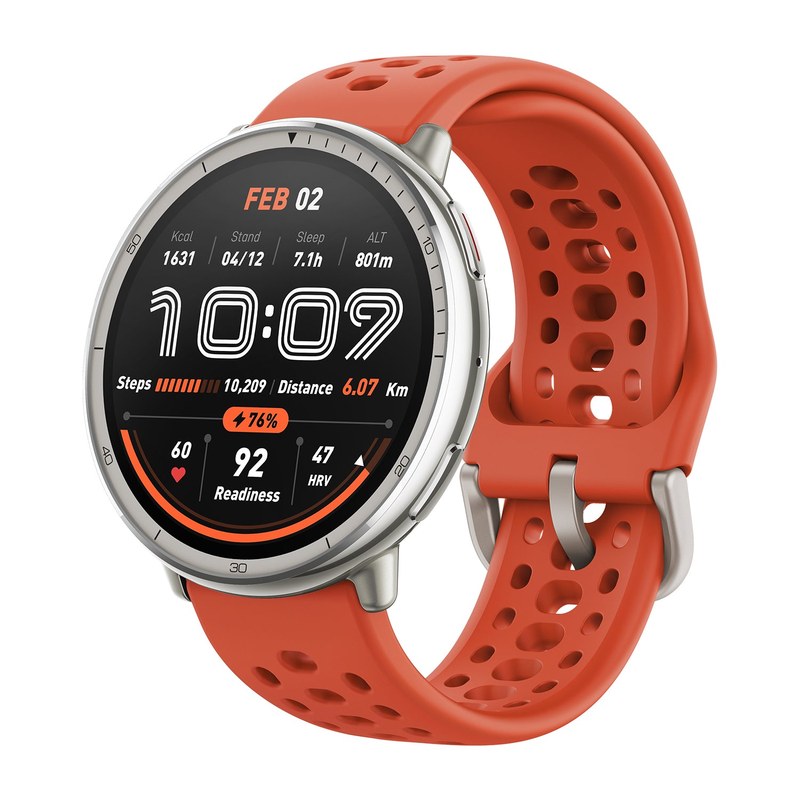
Amazfit Active 2
Best smartwatch under $100 for weekend athletes
- Our Rating: 4.4 / 5.0
- Price: $99.99 (Sport) / $129.99 (Premium)
- Display: 1.32" AMOLED, 466×466
- Battery (tested): 4–7 days
- Weight: 29.5 g without strap
- Water resistance: 5 ATM
- GPS: Single-band, 5 satellite systems
- Case size: 43 mm
- Charge time: ~90 minutes
- Software: Zepp OS 4.5
- Payments: NFC on Premium only
Pros
- Free offline maps with turn-by-turn directions, which nothing else at $99 offers
- Four to seven days of real-world battery instead of the usual two
- Heart rate lands within 4% of a Polar H10 chest strap on steady efforts
- 1,842-nit AMOLED stays readable in direct sunlight
Cons
- The standard model's tempered glass picks up scratches within months; the sapphire Premium fixes that for $30 more
- No NFC payments on the $99 model
- Stress tracking barely works, and the Zepp Flow assistant lags
Six months in, the standard model's glass will have scratches. That's the real tax on the $99 price, and it's why we'd point most people at the $129.99 Premium with sapphire. Get past that and this watch over-delivers: a week of battery in normal use, sleep tracking that ran neck-and-neck with the Oura Ring 4 in TechAdvisor's six-month test, and offline maps you'd normally pay Garmin money for. Interval runners should pair a chest strap or step up to a dedicated GPS watch. Everyone else: this is the budget smartwatch to beat in 2026.
Does a $99 Watch Feel Cheap?
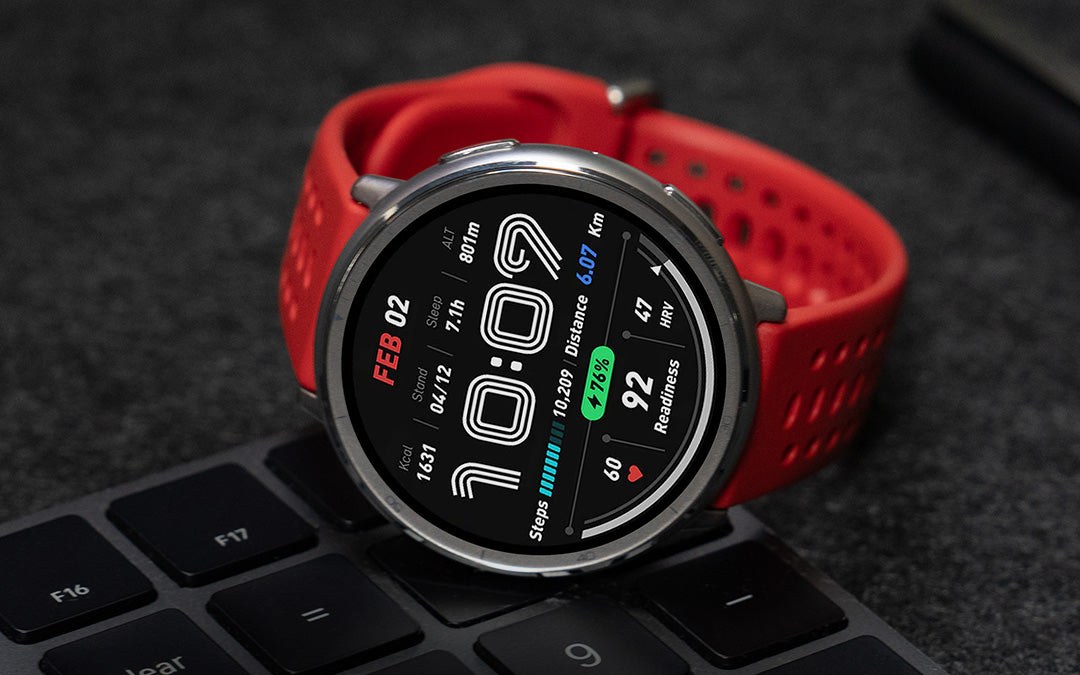
Less than you'd expect. The case is stainless steel up top with plastic underneath, 43 mm across and 29.5 g without the strap. Light enough to sleep in. There's no raised bezel; the glass runs edge to edge with a printed minute scale under it, which reads as more expensive than it is.
The 1.32-inch AMOLED is the party trick. Notebookcheck measured 1,842 nits peak with the ambient sensor active, and that number matches the consensus: nobody complains about outdoor visibility. One regression the marketing skips: the panel refreshes at 60 Hz, down from the 120 Hz of the original Active. Scrolling looks fine, just not silky.
Two genuine annoyances. The silicone strap's buckle is fiddly to thread one-handed, and the sensor bump keeps the watch from sitting flat on bonier wrists. Neither is a dealbreaker at this price. The glass is another story, and it gets its own section below.
How Long Does the Battery Actually Last?
Amazfit claims 10 days from the 270 mAh cell. Nobody hit that. Here's what the three long-term tests actually recorded:
- Trusted Reviews: about a week of moderate use; 3–4 days with heavy use and the screen always on
- TechAdvisor: 4–5 days with the always-on display plus daily workouts, sustained across six months
- Notebookcheck: 3–4 days with every sensor enabled and notifications flowing
So the honest range is four to seven days depending on how hard you push it. That still embarrasses an Apple Watch, which wants the charger every night. A full charge takes about 90 minutes on the proprietary magnetic puck; ten minutes before bed covers a night of sleep tracking. If battery is your whole reason for buying, the cheaper Amazfit Bip 6 runs longer still.
Can You Trust Its Heart Rate and GPS?
For steady efforts, yes. Notebookcheck strapped it against a Polar H10 chest strap and logged an average deviation of 3.77 percent on bike rides, never more than 5 bpm off. SpO2 tracked within 0.34 percent on average. Those are numbers some $300 watches don't hit.
Intervals are where it wobbles. Sharp effort spikes register a few seconds late compared with a chest strap, and TechAdvisor found readings trending slightly high against an Apple Watch. The fix is cheap: the Active 2 pairs with external Bluetooth heart-rate straps, so serious runners can add a $50 strap and get lab-grade data.
GPS is single-band across all five satellite constellations. Verdict from every tester: reliable track, mildly lazy cornering. It rounds off tight curves, so a twisty 10K might read 40 meters short. Pool swimmers get a surprise, though. Trusted Reviews found swim distance and pacing matched a dedicated sports watch. If you need dual-band precision for racing, that's GPS sport watch territory.
Zepp OS 4.5, Offline Maps and the Premium Question
The headline feature is free offline maps with turn-by-turn navigation. On a $99 watch. Download the region in the Zepp app, and trailheads with zero cell coverage stop being scary. Garmin charges triple digits for that privilege.
The rest of the software is solid with rough edges. You get 164 workout modes, a readiness score and sleep staging that TechAdvisor found tracked "pretty much in line with the Oura Ring 4." The Zepp phone app has matured into something genuinely pleasant. But automatic workout detection has to be switched on per sport, one at a time. The Zepp Flow voice assistant understands basics and takes its time doing it. And stress tracking is decorative: TechAdvisor's reviewer logged exactly one stress alert in six months of London commuting.
About the $129.99 Premium: it adds sapphire glass, NFC payments via Zepp Pay, a leather strap and a spare sport band. Normally we'd call a 30 percent price bump for glass a shrug. Not here, for reasons the next section makes plain.
What Breaks After Six Months?
The glass. TechAdvisor's long-term unit collected "a number of small scuffs and scratches" on its tempered glass despite careful use, enough that their verdict specifically recommends paying up for the sapphire version. The stainless bezel shrugs off knocks; the flat glass in the middle does not.
Everything else held up. The strap stayed intact, the battery didn't degrade noticeably and the software got faster with firmware updates rather than slower. So the durability question is really a buying question: if you climb, lift or generally treat watches badly, the sapphire Premium is the version to get. Desk workers can pocket the $30.
Should You Buy the Amazfit Active 2?
If this is your first smartwatch, or your budget stops at three figures: yes, and it isn't close. Nothing under $150 matches this combination of screen, battery, accuracy and offline maps. It earns its 4.4.
Three groups should pass. Interval-obsessed runners will outrun the optical sensor (or should budget for a chest strap). Anyone who pays by wrist needs the Premium, since the $99 model has no NFC. And iPhone owners who live inside iMessage will keep bumping into the platform limits every budget watch has on iOS.
One more thing worth knowing: this watch goes on sale constantly. The Sport edition has hit $84.99 and the Premium dropped to $92 in February 2026. Set a price alert before paying list.
Three Alternatives Worth a Look
Amazfit Bip 6 ($79). The Active 2's cheaper sibling trades the stainless case and some polish for even longer battery. It tops our budget smartwatches guide for the strict-budget crowd.
Samsung Galaxy Watch 8 ($349). The upgrade path for Android users who want real wrist payments, deeper notifications and a proper app store. Full breakdown in our best smartwatches roundup.
A dedicated GPS watch. If the accuracy sections above gave you pause, you're the person dual-band GPS was made for. Start with our GPS sport watch guide; prices begin around $250.
Where This Review's Data Comes From
We haven't finished our own bench test of the Amazfit Active 2 yet; a retest is planned once our unit arrives. Every measured claim above is drawn from three independent long-term reviews and the manufacturer's spec sheet: Notebookcheck's instrumented lab review (display, battery and sensor-accuracy measurements), TechAdvisor's six-month review (durability and daily-use findings), Trusted Reviews (battery and swim testing) and Amazfit's official product page (pricing and specifications, checked July 2026). Where sources disagreed, we quoted the range rather than the prettiest number.