Garmin Fenix 8 Review: Two Weeks Between Charges
Published: July 7, 2026
We independently test everything we recommend.
Buying through links on our site supports our work.
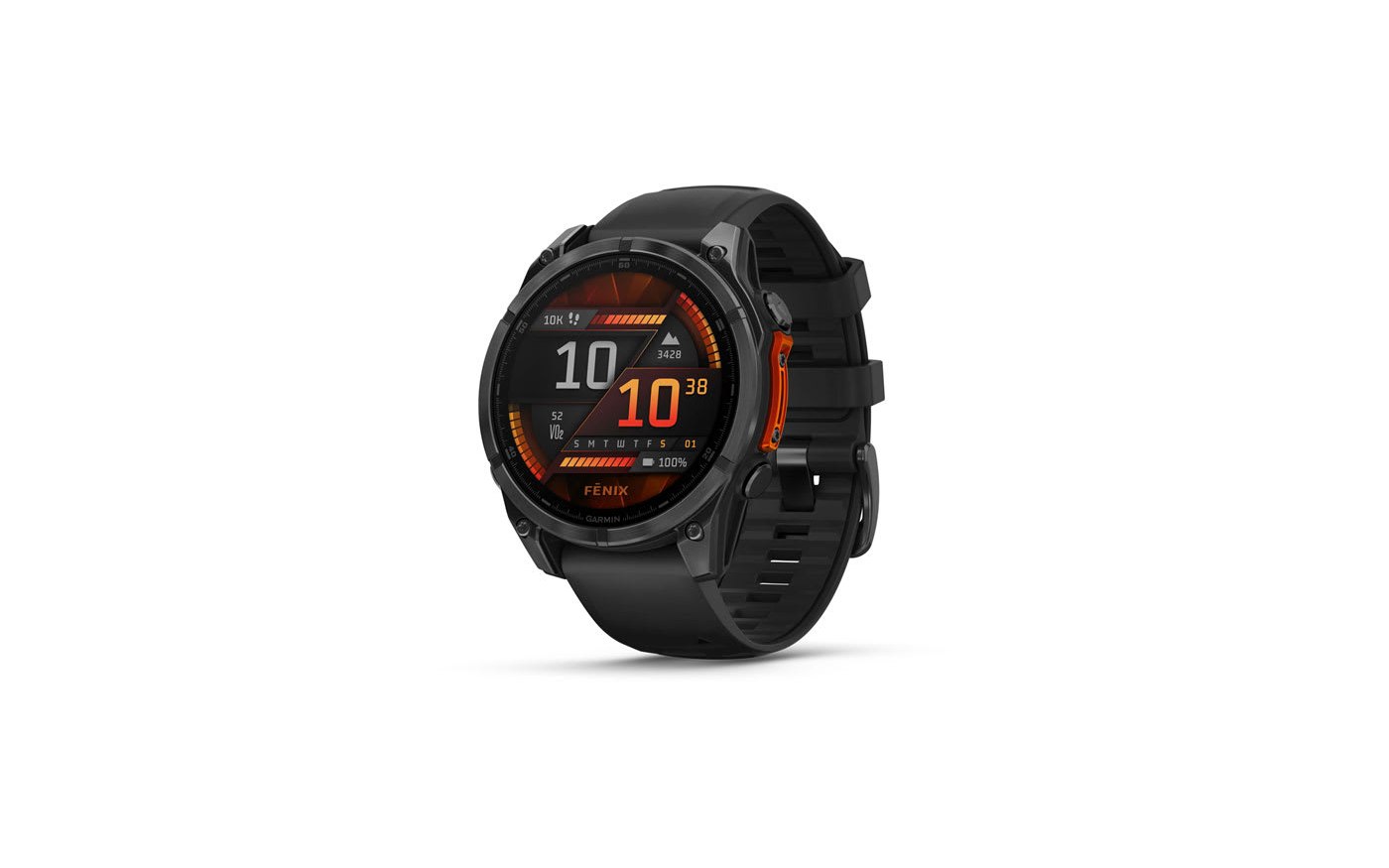
Editor's Note: Checked July 2026: the 47mm AMOLED holds at $999.99. The Fenix 8 Pro (satellite messaging, LTE) sits above it; the older Epix Pro remains the discount route to most of these features.
The Garmin Fenix 8 settled an argument Garmin fans had for years: whether a bright AMOLED screen would gut the marathon battery life that made the Fenix line famous. The measured answer, per Treeline Review's months-long test, is 16.5 to 18 days per charge with the display always on. The old dim-but-eternal MIP panel is survived by a screen you can actually read at noon.
Since launch, the Fenix 8 has become the reference point every adventure watch gets measured against, including Apple's Ultra 3. We've distilled where it stands in mid-2026 from DC Rainmaker's in-depth review, Treeline's long-term data, HikingGuy's trail testing and DiveIn's evaluation of its scuba chops.
Garmin Fenix 8 — Quick Specs
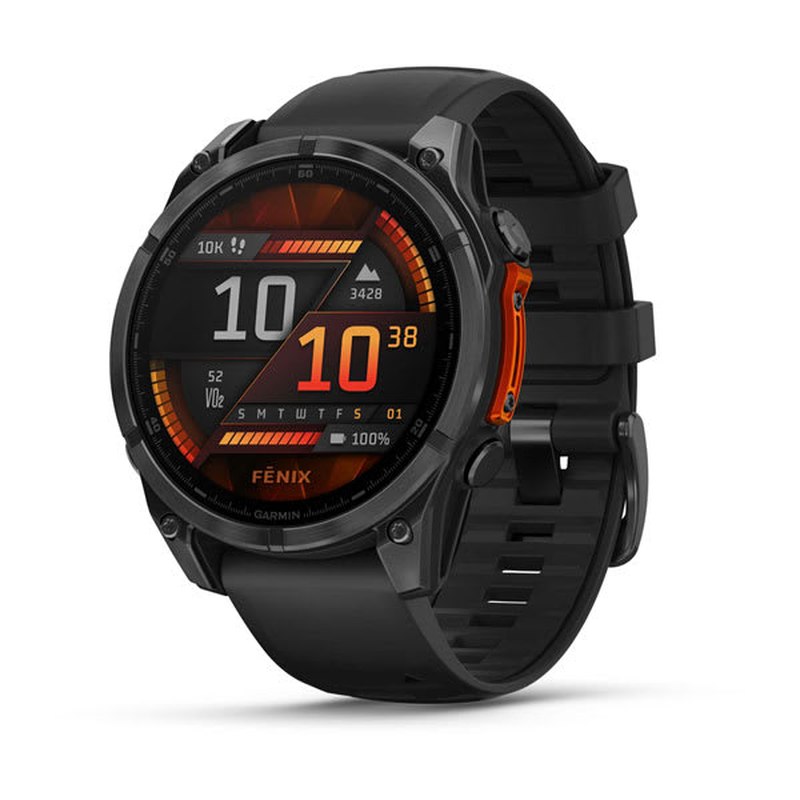
Garmin Fenix 8
Best Multisport Smartwatch
- Our Rating: 4.7 / 5.0
- Price: $999.99 (47mm AMOLED)
- Display: 1.4" AMOLED touchscreen
- Battery (tested): 16-18 days with AOD
- Weight: 73 g (47mm)
- Water resistance: 10 ATM, 40 m dive rated
- GPS: Multiband with SatIQ
- Maps: Preloaded TopoActive, worldwide
- Extras: Flashlight, speaker/mic, nitrox diving
- Works with: Android and iPhone
Pros
- 16 to 18 real-world days per charge, measured over months, with the display always on
- Preloaded topo maps on a touchscreen that makes navigation genuinely fast
- Dive-rated to 40 m with nitrox support, a first for the line
- Flashlight, speaker, calls, music: the everything watch, literally
Cons
- A thousand dollars before you've bought a strap
- 73 g of watch; sleeper and small-wristed athletes will feel it
- Fenix 8 Pro's satellite messaging makes the standard model feel less future-proof
A thousand dollars and 73 grams: the Fenix 8 asks a lot of your wallet and your wrist, and the newer Fenix 8 Pro (with inReach satellite messaging built in) complicates the buying decision further. What it gives back is a watch you charge twice a month: Treeline Review's long-term test measured 16.5 to 18 days of always-on use, with full topo maps, a 40 m dive rating and every training tool Garmin makes. Runners who never leave pavement should save $250 with the Forerunner 970. For everyone whose weekends involve trailheads, this remains the one to beat.
Battery: The Number Everyone Asks About
Garmin's claim is up to 29 days in smartwatch mode with the display in gesture mode. Nobody uses gesture mode on a screen this nice, so the number that matters is Treeline's: 16.5 to 18 days, always-on, across months of real use with daily activities.
Translate that to trips. A week of backpacking with hours of daily GPS tracking doesn't require the charger to leave the house. HikingGuy's testing echoes the same experience; battery anxiety simply exits the conversation. Compare the Ultra 3's three days, or the Forerunner 970's four to five, and you see what the extra thickness buys.
The flashlight deserves its own sentence: a real LED array that long-term testers consistently rank among the most-used features on the watch. Tent at 2 a.m., dog walk at 10 p.m., dropped keys. Always the flashlight.
Maps, Diving, and the Everything-Watch Problem
The Fenix 8 ships with worldwide TopoActive maps onboard, and the touchscreen turned Garmin's clunky button-panning into something you can actually use with cold fingers. Routing, storm alerts, SpO2-informed altitude acclimation: the outdoor toolkit has no gaps we can find.
New this generation: a depth sensor and dive computer rated to 40 meters with nitrox support, which DiveIn judged legitimately capable for recreational limits, not a checkbox feature. Add the speaker and mic (phone calls, voice commands), music storage, and Garmin Pay.
The honest question is whether you need all of it. Garmin's own catalog says most people don't: the Venu 4 covers health and fitness for $549, and the Forerunner 970 covers serious running for $749. The Fenix 8 is for the person whose one watch must do trail, pool, reef and boardroom.
Verdict: Still the King, Watch the Pro
Mid-2026 context matters. The Fenix 8 Pro now sits above this watch with built-in inReach satellite messaging and LTE, which means the standard 8 is no longer the top of the mountain. For most buyers that's fine; satellite texting is a want, not a need, and the Pro premium is steep.
The Fenix 8 keeps its 4.7. It's docked for weight and a price that crossed the psychological thousand-dollar line, and for nothing else. Two weeks of battery under an AMOLED screen remains unanswered by anyone, and until Apple or Samsung finds another 500 percent of battery life somewhere, this is where the adventure category peaks. Start at our GPS sport watch guide if you're weighing the whole field.
Where This Review's Data Comes From
Long-term battery measurement: Treeline Review. Feature depth and platform analysis: DC Rainmaker. Trail use: HikingGuy. Dive capability: DiveIn. Pricing: July 2026 retail. This page grew from guide-format data into a full review in July 2026; sources were re-verified in the process.